Content Marketing Budget 2026: How Much Should SMEs Spend?
Chraedon Team
Author

As we step into 2026, one question keeps business leaders awake at night: "How much should I actually be spending on content marketing?" It's the marketing equivalent of asking how long is a piece of string—except this time, your business growth depends on getting the answer right.
If you've ever felt like you're throwing money into the digital marketing void and hoping something sticks, you're not alone. The landscape has shifted dramatically, and the old rules simply don't apply anymore. With AI reshaping how content gets discovered, UK SMEs facing unprecedented competition, and budgets tighter than ever, setting your content marketing budget 2026 requires both strategy and science.
Why January 2026 is Crucial for Setting Your Content Marketing Budget Right

The marketing world has transformed beyond recognition over the past year. Digital now represents over 83% of UK advertising spend, and the way audiences discover and consume content has fundamentally changed. AI systems aren't just helping us create content—they're determining which content gets seen, shared, and trusted.
For UK SMEs, this shift presents both an enormous opportunity and a significant challenge. Traditional marketing approaches that worked in 2023 are already becoming obsolete. The businesses that thrive in 2026 will be those that adapt their content marketing strategies—and budgets—to this new reality.
The stakes couldn't be higher. Get your content marketing budget right, and you'll build the foundation for sustainable growth. Get it wrong, and you'll watch competitors capture the market share that should have been yours.
The AI Content Revolution
Content marketing in 2026 isn't just about creating great content—it's about creating content that AI systems can understand, trust, and recommend. This means your budget allocation needs to shift towards:
- Comprehensive, research-backed content that establishes credibility
- Structured formats (FAQs, tables, step-by-step guides) that AI can easily parse
- Original data and expert insights that position your brand as authoritative
- Technical optimisation that helps AI systems understand your content's relevance
Industry Benchmarks: What UK SMEs Actually Spend on Content Marketing
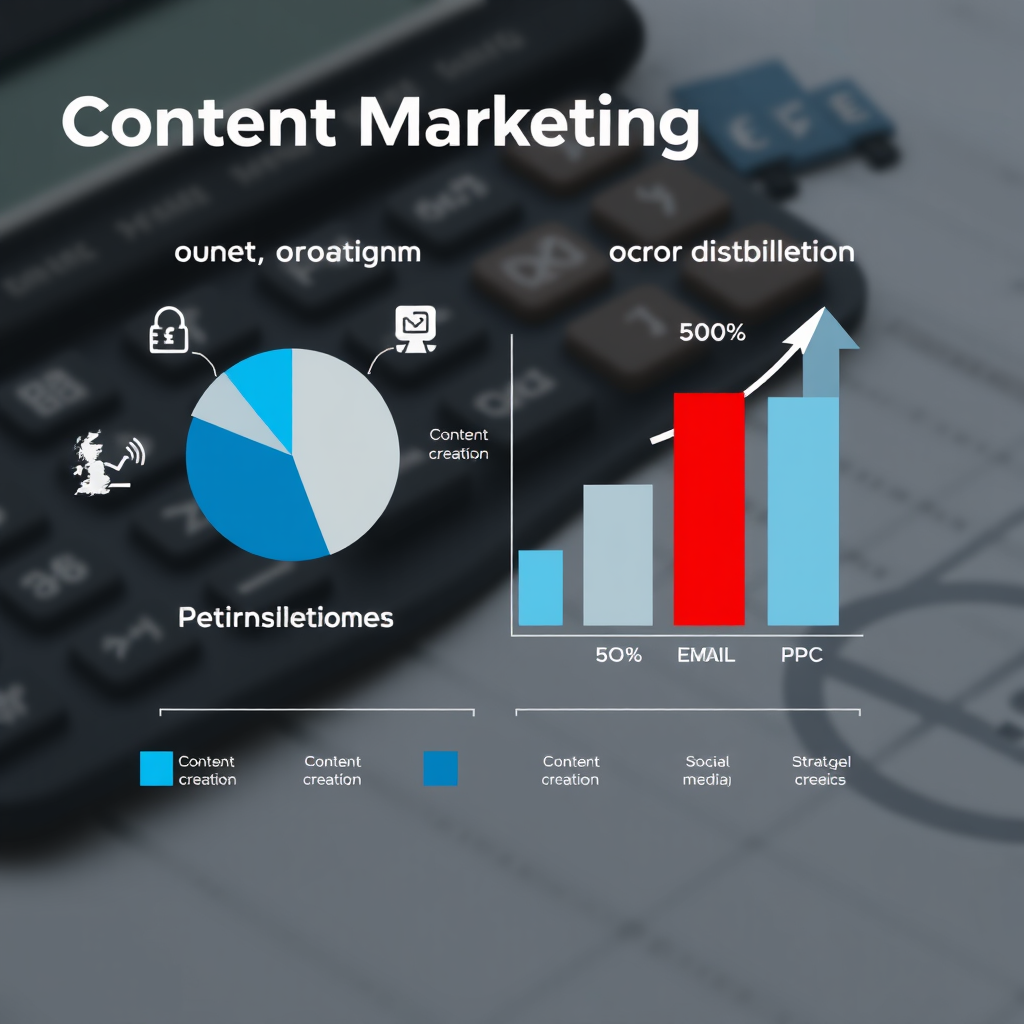
Let's cut through the confusion with hard data on what UK SMEs are actually investing in content marketing.
The Reality of SME Marketing Spend
UK SMEs with under £10 million revenue typically invest 16.8% of revenue on marketing—significantly higher than larger companies who benefit from existing brand equity and economies of scale. This might seem steep, but there's solid reasoning behind these numbers.
Smaller businesses need to invest proportionally more to build market awareness and compete effectively. While B2B companies generally budget 6-8% of revenue for marketing in 2026, this represents a 15% decline from 2023 levels and remains well below pre-pandemic benchmarks.
Digital Marketing Budget Breakdown
For content marketing specifically, successful UK SMEs typically allocate their digital marketing budgets as follows:
Starter Budget (£2,000-3,000/month):
- SEO tools and content creation: £500
- Email marketing platform and automation: £300
- Social media advertising: £200-400
- Basic PPC campaigns: £1,000-1,500
Growth Budget (£5,000-7,000/month):
- Expanded content marketing: £2,000
- Multi-channel PPC: £2,500
- Email marketing and automation: £800
- Social advertising: £1,000
- Tools and technology: £700
Scaling Budget (£8,000-10,000/month):
- Comprehensive content strategy: £3,000
- Aggressive PPC expansion: £3,500
- Email and marketing automation: £1,200
- Social advertising: £1,500
- Video production: £800
E-commerce Specific Benchmarks
E-commerce businesses face unique challenges, with different spending patterns throughout their lifecycle:
- First year: 30-40% of revenue on marketing (building from zero brand awareness)
- Years 2-3: 20-30% as organic traffic and repeat purchases develop
- Mature businesses: 15-25% with established customer bases and brand recognition
Budget Allocation Framework: Splitting Spend Across Content Types and Channels
The most successful content marketing strategies in 2026 follow a strategic allocation framework that balances creation with distribution. Here's how to structure your content marketing budget 2026 for maximum impact.
The 40/60 Rule for Content Success
One of the biggest mistakes SMEs make is allocating too much budget to content creation and not enough to distribution. The optimal split for 2026 is:
Content Creation (40%):
- Pillar content and comprehensive guides
- Video production and visual assets
- Original research and data studies
- Expert interviews and thought leadership pieces
Distribution & Promotion (60%):
- SEO optimisation and technical implementation
- Paid social amplification across relevant platforms
- Email distribution and nurture sequences
- Influencer partnerships and collaborative content
- PR outreach and media relations
- Platform-specific formatting and adaptation
This might feel counterintuitive, but the data is clear: a £4,000 content piece with £6,000 promotion will consistently outperform a £10,000 piece with just £2,000 promotion.
Channel-Specific Budget Allocation
SEO and Content Marketing (45% of digital budget):
- Content creation: 40%
- Technical SEO: 20%
- Link building and digital PR: 25%
- Tools and platforms: 15%
SEO remains the top investment priority for 45% of marketers in 2026, but the approach has evolved. You're no longer just optimising for search engine crawlers—you're optimising for AI systems that need to understand your content's credibility and relevance.
Email Marketing (15-20% of budget): Despite being one of the oldest digital channels, email marketing should be delivering 15-25x ROI. If it's not hitting these numbers, there's likely something wrong with your strategy or implementation.
Paid Social and PPC (25-30% of budget): With 84% of UK advertisers now using Performance Max campaigns, budget focus should shift towards feeding AI systems with high-quality creative assets and first-party data signals.
The Three-Bucket Approach
Structure your content marketing budget using this proven framework:
The "Invest" Bucket (60-70% of budget): This covers your foundation—the non-negotiables that keep your content marketing engine running:
- Essential tech stack and tools
- Core content creation resources
- Basic SEO and distribution infrastructure
- Agency retainers for ongoing support
The "Experiment" Bucket (20-30% of budget): Allocated for testing new channels, content formats, or strategies:
- Video content experiments
- New platform testing (TikTok, emerging social platforms)
- Interactive content and experiences
- AI-powered content tools and automation
The "Emergency" Bucket (10% of budget): Ring-fenced for unexpected opportunities or challenges:
- Rapid response to trending topics
- Competitor reaction campaigns
- Platform algorithm changes requiring quick pivots
- Seasonal opportunity capitalisation
ROI Tracking Methods to Justify Your 2026 Content Marketing Investment
Justifying your content marketing spend requires robust measurement frameworks that demonstrate clear business impact. Here's how successful UK SMEs are proving ROI in 2026.
Essential Metrics for Content Marketing ROI
Revenue-Focused Metrics:
- Direct revenue attribution from content touchpoints
- Customer lifetime value influenced by content engagement
- Cost per acquisition across different content channels
- Revenue per content piece or campaign
Engagement and Performance Indicators:
- Content consumption rates and time spent
- Social sharing and amplification metrics
- Email open rates and click-through rates (aim for 15-25x ROI)
- Search visibility and organic traffic growth
Brand Impact Measurements:
- Brand awareness and sentiment tracking
- Share of voice in your industry
- Backlink acquisition and domain authority growth
- Expert positioning and thought leadership recognition
Advanced Attribution Techniques
Modern content marketing ROI requires sophisticated tracking approaches:
Multi-Touch Attribution: Track how content influences the entire customer journey, not just last-click conversions. Use tools like Google Analytics 4's advanced attribution models to understand content's role in complex B2B sales cycles.
Cohort Analysis: Compare customer behaviour and lifetime value based on their first content touchpoint. Customers who discover you through comprehensive guides often have higher lifetime values than those from basic blog posts.
Content Scoring Systems: Implement scoring systems that weight different types of engagement based on their correlation with eventual conversions. A whitepaper download might score higher than a blog post view.
Building Your ROI Dashboard
Create a simple but comprehensive dashboard that tracks:
- Monthly recurring revenue influenced by content
- Cost per content-influenced lead
- Organic traffic growth and keyword rankings
- Content engagement rates across channels
- Brand mention sentiment and share of voice
Update this monthly and share it with stakeholders to maintain content marketing budget support throughout the year.
Implementation Strategy and Next Steps
Now that you understand the benchmarks and framework, here's how to implement your content marketing budget 2026 effectively.
Start with Profitability, Then Scale
The biggest mistake SMEs make is thinking "if I just spend more on content marketing, I'll make more money" while they're already losing money on each customer acquisition.
Get profitable at £1,000/month content spend before jumping to £3,000/month. Master £3,000 before hitting £10,000. Profitable growth beats rapid growth every time.
Focus Before You Expand
Initially focus on 2-3 core channels rather than spreading budget across 8-10 channels ineffectively. Once you've mastered your core channels and proven ROI, you can expand into new areas.
A successful British womenswear brand achieved a 30% increase in ROAS with an average of 13.94x return by focusing intensively on Google Ads optimisation before expanding to other channels.
Build Your Buffer Strategy
When submitting your content marketing budget, build in a 10% buffer. If you need £50,000 to hit your targets, submit a budget for £55,000. This serves two purposes:
- When asked to cut costs (which always happens), you can remove the buffer without damaging core strategy
- If approved without cuts, ring-fence the buffer as emergency funding for unexpected opportunities or platform changes
Quarterly Review and Optimisation
Set quarterly review points to assess:
- Which content types and channels are delivering the strongest ROI
- Where budget reallocation could improve performance
- New opportunities emerging from market or platform changes
- Competitive threats requiring strategic response
Conclusion: Your 2026 Content Marketing Budget Action Plan
Setting your content marketing budget 2026 isn't just about picking numbers—it's about building a strategic foundation for sustainable growth. The UK SMEs that will thrive in 2026 are those that understand the new content landscape, allocate budgets strategically, and measure performance rigorously.
Remember the key principles:
- Invest 16.8% of revenue if you're under £10M turnover
- Follow the 40/60 rule: 40% creation, 60% distribution
- Focus on profitability before scaling spend
- Track ROI religiously and adjust quarterly
- Build buffers for unexpected opportunities
The content marketing landscape will continue evolving throughout 2026, but with the right budget framework and measurement approach, your SME can compete effectively against much larger competitors.
Ready to develop a content marketing strategy that delivers measurable results? Contact our team at Chraedon for a consultation on optimising your 2026 content marketing budget and implementation strategy. We've helped dozens of UK SMEs achieve profitable growth through strategic content marketing investment.
Written by
Chraedon Team
Helping businesses grow through strategic digital marketing and innovative solutions.